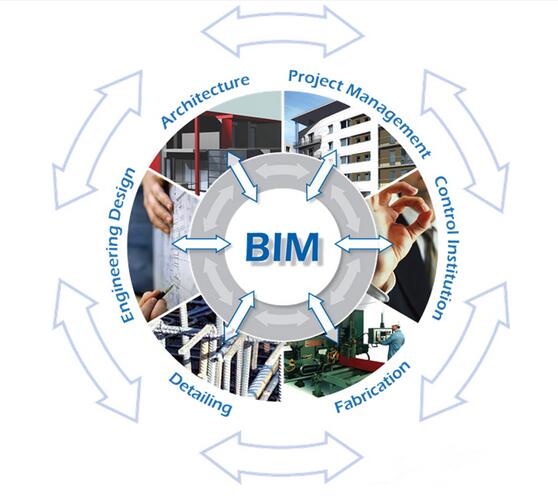
在建筑設計和施工,以及民用基礎設施領域中,建筑信息模型[BIM]已經成為未來我們的住宅,商業樓宇,道路,公路,供水系統,以及更多領域中的一個重要因素。世界各國政府都強制或建議采用BIM,承認它降低項目風險和低效率,提高生產力和安全記錄,并且運維項目,從而有助于順利完成項目的價值。現在規定使用BIM的國家,包括美國的GSA和陸軍工程兵團,挪威,英國,丹麥,比利時,荷蘭,香港,新加坡,中國,日本,韓國,這里只是僅舉幾例。不熟悉BIM?BIM是一個智能的基于模型的流程,它有助于使建筑和基礎設施的設計,工程,項目和運營信息變得準確,方便和可操作。項目團隊可以創建和共享數據豐富的模型,并使用一致的數據以增進了解,并且參與決策制定從概念設計到施工圖紙設計到運維。盡管正在被廣泛采用的過程中,一些謬見,或誤解,仍然放慢了普遍接受的進度。下面是五個需要被揭開的關鍵謬見:#1 - 誤解:BIM僅僅用于建筑物,甚至可能只使用于建筑師。建筑信息模型描述了一個過程,這個過程是非常適合于各類建筑和民用基礎設施項目的。使用BIM的利益在McGraw Hill Construction Smart Market Reports有報道,包括:
#3 - 誤解:BIM采用率低,特別在土木工程和施工中。施工部分已經超越建筑師成為BIM采用中增長最快的部分。政府的命令和業主的要求也越來越多地促使BIM在公共基礎設施項目中的采用,幫助降低風險和成本。見Dodge的BIM Value of Construction Smart Market Report。
#5 - 誤解:BIM的價值在項目完結時結束。沒有什么比這更不符合事實!如上所述,對業主來說,BIM在設計和施工階段很有價值,然而它在建設或基礎設施的運營和維護上擁有持久的價值。在項目的BIM模型中的智能數據可以被利用,例如,支持預防性的維護和調度,建筑系統的分析,資產管理,空間管理和追蹤,以及防災規劃。English VersionIn the world of building design and construction, as well as civil infrastructure, Building Information Modeling [BIM] has become an essential factor for the future of making our homes, commercial buildings, roads, highways, water systems, and more.Governments around the world are mandating or recommending BIM, recognizing its value for helping to deliver projects successfully by lowering project risk and inefficiencies, improving productivity and safety records and keeping projects to time.Nations now mandating the use of BIM, include the USA’s GSA and Army Corps of Engineers, Norway, UK, Denmark, Belgium, Netherlands , Hong Kong, Singapore, China, Japan , Korea, just to name a few.Not familiar with BIM? BIM is an intelligent model-based process that helps make design, engineering, project, and operational information accurate, accessible and actionable for buildings and infrastructure. Project teams can create and share a data rich model and use the same consistent data to improve understanding and decision making from conceptual design through construction documentation and for operations and maintenance.Despite becoming a widely adopted process, some myths, or misconceptions, still linger slowing universal acceptance. Here are five key myths that need to be exposed:#1 – Misconception: BIM is just for buildings, possibly even only for architects.Building Information Modeling describes a process and that process is well suited for all types of building and civil infrastructure projects. The benefits of using BIM, as reported inMcGraw Hill Construction Smart Market Reports, include:
Optimized designs and improved quality
Less rework, waste, and cost (result of more efficient workflows)
#2 – Misconception: BIM requires a highly detailed model that only experts can create.BIM starts with a 3D model, but it’s more than that. First, no matter how the model gets created, BIM is all about the “I” – the information. With today’s technology, it is possible to gather, synthesize, and share immense amounts of data on any given project or portfolio of assets. More and more we see this information coming in the form of reality capture [laser scans and digital photography], GIS and other publically available data sets [including demographic, zoning, and economic or environmental information]. In construction, that information can take the form of bid sheets, contracts, price lists, and schedules. With a data-rich design or construction model created using a BIM-based design tool, such as Autodesk Revit or InfraWorks 360, you can:
Simulate and visualize key physical and functional characteristics of the design
Coordinate project information and scheduling and collaborate with stakeholders
Build smarter, more agile processes that help retain knowledge and support quality targets
#3 – Misconception: BIM adoption is low, especially in civil engineering and constructionThe construction sector overtook architects as the fastest growing segment to adopt BIM. Government mandates and owner requirements are increasingly driving the use of BIM on public infrastructure projects to help reduce risk and cost. See theBIM Value of Construction Smart Market Reportfrom Dodge.#4 – Misconception: BIM is old news.The time has never been more important for BIM! Disruptive innovation is transforming markets and traditional methods of working are being displaced. As tools and process are evolving rapidly, blurring the lines between physical and digital, and creating a new era of connection, BIM provides a critical foundation that can help designers, builders and owners gain the competitive advantage with a greater ability to access, share, and make useful enormous amounts of information throughout the lifecycle of buildings and infrastructure. In the era of connection, you are beginning to see the following:Connected Teams --Transition from applications and files to put theproject in the center from the start. Project and teams are kept up to date in the office and on the job site, using the cloud, connected data and systems to unlock capabilities to share and collaborate across the lifecycle in real time without barriers.Connected Insight --Huge amounts of data are now available and connected technology helps to make the data useful to the project.In context, accurate informationallows for informed decision making and engagement at every stage of the lifecycle, allowing for the “best possible” as opposed to today’s “best practical”.Connected Outcomes --Start with the desired outcome, scripting the rules for design and harnessing the computing power of the cloud to explore a near infinite range of possibilities. Software becomes an advisor in the design and engineering process, ensuring optimal designs in a fraction of the time.Connected Delivery --As the lines between digital processing and the physical systems blur, the design and build phases of projects are moving closer together. Seamless integration of these processes translates intent to execution flawlessly, saving time and money.
#5 – Misconception: The value of BIM ends with the completion of a project.
Nothing could be further from the truth! As noted above, BIM has great value to owners during the design and construction phase, but also has enduring value for building or infrastructure operations and maintenance. The intelligent data within a project"s BIM model can be used, for example, to support preventative maintenance and scheduling, building systems analysis, asset management, space management and tracking, and disaster planning.